

Marshall DSL40CR Manual: Comprehensive Article Plan

This article details accessing the Marshall DSL40CR manual‚ covering Quick Start‚ Owner’s‚ Service‚ and User guides in PDF format for troubleshooting and operation.
The Marshall DSL40CR is a highly versatile‚ all-valve guitar combo amplifier celebrated for its classic Marshall tone and modern flexibility; This amplifier caters to a broad spectrum of guitarists‚ from beginners seeking iconic crunch to professionals demanding nuanced tonal control.
It’s renowned for delivering the legendary Marshall sound at manageable volumes‚ making it ideal for both home practice and stage performance. The DSL40CR boasts two distinct channels – Classic Gain and Ultra Gain – offering a wide palette of sonic possibilities.
Understanding its features and operation requires a thorough review of the official manual‚ which provides essential guidance on setup‚ operation‚ and maintenance. Accessing the correct manual – whether a Quick Start guide‚ Owner’s Manual‚ Service Manual‚ or detailed User Manual – is crucial for maximizing your playing experience.
Understanding the DSL40CR Series
The Marshall DSL40CR belongs to the “Dual Super Lead” series‚ designed to recreate the sought-after tones of classic Marshall amplifiers in a more compact and versatile package. This series bridges the gap between vintage and modern Marshall sounds‚ offering both sparkling cleans and high-gain distortion.
Key to the series’ appeal is its responsiveness and dynamic range‚ allowing players to shape their tone with their playing technique. The DSL40CR’s controls are intuitive‚ yet powerful‚ enabling precise adjustments to achieve a wide variety of sounds.
The official manual is essential for fully grasping the nuances of the DSL40CR series‚ detailing each control’s function and how they interact. It explains the amplifier’s architecture and provides guidance on achieving optimal performance.
Availability of Manuals

Marshall DSL40CR manuals are readily accessible online‚ offering comprehensive support for owners. Currently‚ four distinct manual types are available for free PDF download: a Quick Start guide for immediate setup‚ a detailed Owner’s Manual covering all features‚ a Service Manual for qualified technicians‚ and a comprehensive User Manual.
These resources are hosted on various websites dedicated to guitar amplifiers and Marshall products. A simple online search for “Marshall DSL40CR manual PDF” will yield numerous download links. It’s recommended to download from reputable sources to ensure the manual is complete and virus-free.
Types of Manuals Available
Marshall provides several manual options for the DSL40CR‚ catering to different user needs. The Quick Start Manual offers a streamlined guide for immediate operation‚ ideal for getting sound quickly. The comprehensive Owner’s Manual details every feature‚ function‚ and setting. For technicians‚ the Service Manual provides schematics and repair instructions.
Additionally‚ a standard User Manual is available‚ offering a balance between detail and accessibility. These manuals cover everything from initial setup and troubleshooting to safety precautions and warranty information. Each manual is typically available as a PDF download‚ ensuring easy access and portability.
Quick Start Manual
The Marshall DSL40CR Quick Start Manual is designed for musicians eager to plug in and play. It provides a concise‚ step-by-step guide to basic setup‚ including connecting the amplifier to power and a guitar. This manual focuses on achieving a usable sound quickly‚ covering essential controls like gain‚ volume‚ and channel selection.
It’s perfect for those who prefer a hands-on approach and want to bypass extensive reading. While not exhaustive‚ it highlights key functions for immediate use. Users are still advised to consult the full Owner’s Manual for detailed information and safety instructions before extended use.

Owner’s Manual
The Marshall DSL40CR Owner’s Manual is a comprehensive resource for understanding all aspects of the amplifier. It details every control‚ feature‚ and function‚ offering in-depth explanations of Classic Gain and Ultra Gain channels‚ tone shaping options‚ and the reverb control.
Crucially‚ it includes vital safety precautions and warranty information. This manual guides users through setup‚ speaker impedance matching‚ and footswitch configuration. It also features a dedicated troubleshooting section addressing common issues like no sound‚ hum‚ or distortion. Reading this manual carefully before operation is strongly recommended for optimal performance and longevity.
Service Manual
The Marshall DSL40CR Service Manual is a technical document intended for qualified technicians. It provides detailed schematics‚ parts lists‚ and troubleshooting procedures for repairing the amplifier. This manual outlines disassembly and reassembly instructions‚ valve replacement procedures‚ and guidance on fuse replacement.
It’s a complex resource requiring electronic expertise‚ detailing component locations and testing points. Users should not attempt repairs based on this manual without proper training and equipment. Accessing this manual doesn’t void the warranty‚ but self-repair attempts likely will. It’s best to consult an authorized Marshall service center for any complex issues.
User Manual
The Marshall DSL40CR User Manual is designed for all players‚ offering comprehensive instructions on operating the amplifier; It details every control‚ from the Classic Gain and Ultra Gain channels to the Bass‚ Middle‚ Treble‚ and Presence tone shaping options.
This manual explains gain staging‚ channel switching‚ and utilizing the Tone Shift button for tonal variations. It also covers reverb control and provides guidance on initial setup‚ speaker selection‚ and impedance matching. Crucially‚ the manual includes a troubleshooting section addressing common issues like no sound‚ hum‚ or distortion. Always read this manual carefully before use!
Accessing the Manuals (PDF Download)
Multiple sources offer free PDF downloads of the Marshall DSL40CR manuals. You can find the Quick Start Manual‚ Service Manual‚ Owner’s Manual‚ and comprehensive User Manual readily available online. These resources are invaluable for setup‚ operation‚ and troubleshooting your amplifier.
Several websites compile these manuals into easily searchable databases. Before plugging in your DSL40CR‚ it’s highly recommended to download and review the appropriate manual. The manuals often contain vital safety information‚ warranty details‚ and FCC compliance statements alongside the operational guidance.
Key Features of the DSL40CR
The Marshall DSL40CR boasts versatile features for a wide range of guitarists. It delivers a robust power output utilizing a valve configuration‚ providing classic Marshall tone. Key to its flexibility are the two distinct channels: Classic Gain and Ultra Gain‚ catering to diverse sonic needs.
Tone shaping is achieved through dedicated Bass‚ Middle‚ Treble‚ and Presence controls. Precise adjustments are possible with the Master Volume and Gain controls‚ allowing for nuanced sound creation. These features combined deliver the iconic Marshall sound‚ making the DSL40CR a powerful and adaptable amplifier.
Power Output and Valve Configuration
The Marshall DSL40CR delivers 40 watts of power‚ providing ample volume for rehearsals‚ recording‚ and smaller gigs. This amplifier utilizes a valve configuration consisting of 3 x ECC83 (12AX7) preamp valves and 2 x EL34 power valves. This classic pairing is renowned for its warm‚ dynamic tone and responsive feel.
The EL34 power valves contribute to the amplifier’s signature Marshall crunch and overdrive. The preamp valves provide a high gain platform‚ allowing for a wide range of tonal possibilities. This valve combination ensures the DSL40CR delivers authentic Marshall tone and performance.
Channels: Classic Gain and Ultra Gain
The Marshall DSL40CR features two distinct channels: Classic Gain and Ultra Gain‚ offering versatility for various playing styles. The Classic Gain channel provides a more vintage-voiced tone‚ ideal for blues‚ rock‚ and classic rock. It delivers a warm‚ responsive sound with moderate gain levels.
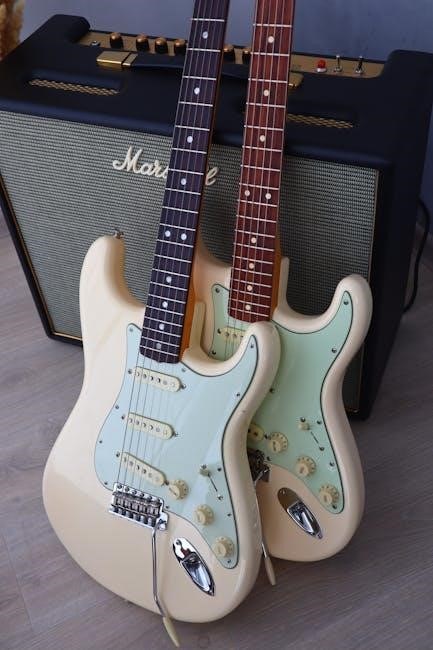
The Ultra Gain channel offers higher gain and a more aggressive tone‚ suited for hard rock‚ metal‚ and high-gain applications. This channel provides a powerful‚ saturated sound with plenty of sustain. Both channels are footswitchable‚ allowing for seamless transitions during live performance‚ expanding tonal options.
Tone Controls: Bass‚ Middle‚ Treble‚ Presence
The Marshall DSL40CR provides comprehensive tonal shaping with its four-band EQ section. Bass controls the low-frequency response‚ adding warmth and fullness. Middle controls the mid-range frequencies‚ crucial for clarity and definition. Treble adjusts the high-frequency content‚ adding brightness and sparkle.
The Presence control shapes the upper harmonics‚ influencing the amplifier’s overall bite and responsiveness. These controls interact to allow precise sculpting of the sound. Experimentation is key to finding the ideal tonal balance for different guitars‚ playing styles‚ and musical genres‚ offering a wide sonic palette.
Master Volume and Gain Controls
The Marshall DSL40CR features independent Gain and Master Volume controls for each channel – Classic Gain and Ultra Gain. Gain controls the input sensitivity‚ dictating the amount of preamp distortion. Lower settings provide clean tones‚ while higher settings deliver increasingly saturated overdrive and distortion.
The Master Volume controls the overall output level‚ allowing you to achieve desired loudness without affecting the preamp gain structure. This separation enables achieving a wide range of tones at manageable volumes. Careful adjustment of both controls is crucial for achieving optimal gain staging and tonal balance.
Setting Up Your DSL40CR
Proper setup is vital for optimal performance of your Marshall DSL40CR. Begin with initial connections: plug your guitar into the input jack and connect the amplifier to a suitable speaker cabinet. Crucially‚ ensure correct speaker selection and impedance matching – the amplifier’s impedance must match the connected cabinet’s impedance.
Next‚ configure the footswitch‚ if used‚ for channel switching or other functions as desired. Double-check all connections before powering on the amplifier. Refer to the manual for specific impedance settings and footswitch programming instructions to avoid damage and ensure safe operation.
Initial Setup and Connections
Before first use‚ carefully unpack your Marshall DSL40CR and inspect for any shipping damage. Connect a properly rated power cable to the amplifier and a grounded electrical outlet. Plug your instrument cable into the input jack‚ and then connect the amplifier to a speaker cabinet using a suitable speaker cable.
Always verify the speaker cabinet’s impedance matches the amplifier’s output impedance to prevent damage. The manual details these specifications. Ensure all connections are secure before powering on. Following these initial steps will guarantee a safe and functional setup for your amplifier.
Speaker Selection and Impedance Matching
Choosing the right speaker cabinet is crucial for optimal DSL40CR performance. The amplifier head supports various impedance loads‚ typically 8 or 16 ohms. Incorrect impedance matching can lead to damage to the amplifier’s output transformer and potentially the speakers themselves.
Refer to the DSL40CR manual for specific impedance settings. Using a speaker cabinet with an impedance that doesn’t match the amplifier’s output will result in reduced volume‚ distorted sound‚ or even amplifier failure. Always double-check these settings before powering on to ensure safe and reliable operation.

Footswitch Configuration
The Marshall DSL40CR supports footswitch control for convenient channel switching and other functions. The manual details the specific footswitch required – typically a two-button footswitch – and how to connect it to the rear panel’s footswitch jack.
Configuration options within the amplifier allow you to customize the footswitch’s functionality‚ assigning buttons to switch between Classic Gain and Ultra Gain channels‚ or to activate/deactivate the reverb. The manual provides clear instructions on programming these settings to suit your playing style. Proper configuration ensures seamless performance changes during live performances or recording sessions.
Operating the DSL40CR
The Marshall DSL40CR’s operation centers around its dual-channel design and intuitive controls. The manual guides users through channel switching‚ enabling selection between the cleaner Classic Gain and the high-gain Ultra Gain. Mastering gain staging – balancing preamp and master volume – is crucial for achieving desired tones.

The Tone Shift button alters the midrange response‚ offering a brighter or darker voicing. Understanding the reverb control allows for adding ambience. The manual emphasizes exploring these features to unlock the amplifier’s versatility‚ catering to diverse musical genres and playing styles. Careful adjustment of these controls yields a wide tonal palette.
Channel Switching
The Marshall DSL40CR facilitates seamless channel switching between Classic Gain and Ultra Gain‚ offering tonal versatility. The manual details how to utilize the front panel channel select switch or an optional footswitch for convenient on-the-fly changes during performance.
Classic Gain delivers a vintage Marshall crunch‚ ideal for blues and classic rock‚ while Ultra Gain provides high-gain distortion suited for modern rock and metal. The manual stresses understanding the distinct characteristics of each channel and how they respond to different pickup types and playing dynamics. Proper channel selection is key to achieving the desired sound.
Gain Staging and Tone Shaping
The Marshall DSL40CR manual emphasizes the importance of gain staging for optimal tone. It explains how the Gain controls on each channel interact with the Master Volume to achieve desired levels of distortion and clarity. Careful adjustment prevents unwanted noise and maximizes dynamic range.
Tone shaping is achieved through the Bass‚ Middle‚ Treble‚ and Presence controls. The manual details how each control affects the overall frequency response‚ allowing users to sculpt their sound. Experimentation is encouraged to find the sweet spot for different guitars and playing styles. Understanding these controls unlocks the amplifier’s full potential.
Using the Tone Shift Button

The Marshall DSL40CR manual highlights the Tone Shift button as a crucial element for tonal versatility. This feature alters the midrange response of the amplifier‚ offering a brighter‚ more aggressive sound when engaged. It’s described as a quick way to cut through the mix or add definition to your playing.
The manual suggests experimenting with the Tone Shift button in conjunction with the EQ controls to discover a wide range of sonic possibilities. It’s particularly useful for switching between rhythm and lead tones‚ or for adapting to different musical genres. Mastering this button expands the amplifier’s tonal palette significantly.
Reverb Control
The Marshall DSL40CR manual details the reverb control‚ a built-in digital reverb effect designed to add ambience and depth to your guitar signal. The manual explains that the reverb level is adjustable via a dedicated control knob‚ allowing you to tailor the amount of reverb to your preference and playing style.
According to the manual‚ the reverb can range from subtle room ambience to lush‚ spacious effects. It’s recommended to start with a low setting and gradually increase it until you achieve the desired sound. Experimentation is encouraged to find the sweet spot for different genres and playing contexts‚ enhancing the overall sonic texture.
Troubleshooting Common Issues
The Marshall DSL40CR manual dedicates a section to resolving frequent problems. It addresses “No Sound Output‚” advising checks of power‚ connections‚ and volume settings. For “Humming or Buzzing Noise‚” the manual suggests investigating cable quality and grounding issues.
Regarding “Distortion Issues‚” the manual guides users to adjust gain staging and tone controls. “Footswitch Problems” are tackled with instructions on proper configuration and cable integrity. The manual emphasizes consulting a qualified technician if issues persist‚ and always referencing the separate Important Safety Instructions (CATS-90009) for detailed guidance.
No Sound Output
If your Marshall DSL40CR produces no sound‚ the manual instructs a systematic check. First‚ verify the amplifier is powered on and the power cable is securely connected. Next‚ confirm the guitar cable is properly plugged into both the instrument and the amplifier’s input jack.
Crucially‚ ensure the volume controls on both the guitar and the amplifier are turned up. The manual also advises checking the channel selection switch and confirming it’s set to an active channel. Finally‚ verify the speaker cable is correctly connected‚ matching impedance appropriately. If problems persist‚ consult a technician.
Humming or Buzzing Noise
The Marshall DSL40CR manual addresses humming or buzzing‚ often stemming from grounding issues. First‚ ensure the amplifier is plugged into a properly grounded outlet. Avoid using extension cords or power strips‚ as these can introduce noise. Check all cable connections – guitar cable‚ speaker cable – replacing any suspect cables.
The manual suggests minimizing proximity to potential interference sources like fluorescent lights or dimmers. Experiment with different outlet locations. If the noise persists‚ a qualified technician should inspect the amplifier’s internal grounding and components for potential faults; Proper shielding is vital for noise reduction.

Distortion Issues
The Marshall DSL40CR manual details troubleshooting distortion problems. Unwanted distortion can arise from excessive gain settings on either the Classic Gain or Ultra Gain channels. Reduce the Gain control and adjust the Master Volume for desired output. Ensure the input signal from your guitar isn’t too strong – try lowering the guitar’s volume knob.
The manual also notes that valve amplifiers naturally produce some harmonic distortion‚ especially at higher volumes. If distortion is harsh or inconsistent‚ a valve issue might be present‚ requiring professional assessment. Check speaker impedance matching; incorrect impedance can cause distortion and potential damage.
Footswitch Problems
The Marshall DSL40CR manual addresses footswitch functionality. If the footswitch isn’t changing channels or engaging/disengaging effects‚ first verify the footswitch is correctly connected to the rear panel’s footswitch jack. Ensure the cable is in good condition – try a different cable to rule out a faulty connection.
The manual explains proper footswitch configuration. Some models require specific footswitch types for full functionality. If issues persist‚ consult the manual’s troubleshooting section for potential internal wiring problems or controller malfunctions. A faulty footswitch itself may also be the cause‚ requiring replacement.
Maintenance and Care
The Marshall DSL40CR manual emphasizes regular maintenance. Valve amplifiers require periodic valve replacement; the manual details the process‚ though it’s often best left to a qualified technician. Fuse replacement is simpler‚ but always use the correct amperage fuse specified in the manual to prevent damage.
Routine cleaning is crucial. The manual advises unplugging the amplifier before cleaning. Use a soft‚ dry cloth to remove dust from the exterior. Avoid liquids near the amplifier. Internal dusting should be performed cautiously‚ avoiding contact with electronic components. Proper care extends the amplifier’s lifespan and maintains optimal performance.
Valve Replacement
The Marshall DSL40CR manual strongly suggests professional valve replacement‚ due to the high voltages present within the amplifier. However‚ if experienced‚ the manual outlines the procedure. Always ensure the amplifier is completely discharged before commencing. Identify the correct replacement valve type as specified in the manual.
Carefully remove the old valve‚ avoiding contact with the glass portion. Install the new valve‚ ensuring it’s fully seated in the socket. Re-bias the amplifier after valve replacement‚ following the manual’s instructions. Incorrect biasing can damage the valves and affect tone. This process requires specialized tools and knowledge.
Fuse Replacement
The Marshall DSL40CR manual emphasizes safety when replacing fuses. Always disconnect the amplifier from the mains power before attempting any fuse replacement. Identify the correct fuse rating – this information is printed near the fuse holder and within the manual itself. Using an incorrect fuse rating can create a fire hazard or damage the amplifier.
Carefully remove the blown fuse using a fuse puller (recommended). Insert the new fuse of the correct rating‚ ensuring it’s firmly seated. If the fuse blows repeatedly‚ there’s an underlying issue requiring professional attention. Do not bypass the fuse or use a higher-rated fuse as a temporary fix.
Cleaning and Dusting
The Marshall DSL40CR manual recommends regular cleaning to maintain performance. Before cleaning‚ always disconnect the amplifier from the power source. Use a soft‚ dry cloth to dust the exterior surfaces. Avoid using liquid cleaners or abrasive materials‚ as these can damage the finish. For stubborn grime‚ lightly dampen the cloth with a mild detergent solution‚ ensuring it’s wrung out thoroughly.
Pay attention to ventilation areas‚ preventing dust buildup that can cause overheating. Gently vacuum the vents with a brush attachment. Avoid getting any moisture inside the amplifier chassis; Regular dusting preserves the amplifier’s appearance and helps ensure optimal operation.
Safety Precautions
The Marshall DSL40CR manual emphasizes several safety precautions. Always ensure proper grounding to prevent electric shock. Never operate the amplifier with a damaged power cord or plug. Avoid exposure to moisture or extreme temperatures. Do not open the chassis‚ as high voltages are present inside‚ even when the unit is switched off.
Fuse replacement should only be done with the correct type and rating. Keep the amplifier away from flammable materials. Ensure adequate ventilation to prevent overheating. Refer to qualified personnel for any servicing or repairs. Following these precautions ensures safe operation and prolongs the amplifier’s lifespan.

Warranty Information
The Marshall DSL40CR amplifier is covered by a limited warranty‚ details of which are found within the owner’s manual. This warranty typically covers defects in materials and workmanship for a specified period from the date of purchase. It’s crucial to register your amplifier to validate warranty coverage.
The warranty does not cover damage resulting from misuse‚ accident‚ or unauthorized modifications. Keep your original purchase receipt as proof of date and location. Contact your authorized Marshall dealer for warranty service or repairs. Full warranty terms and conditions are outlined in the accompanying documentation.
Technical Specifications
The Marshall DSL40CR is a valve amplifier boasting 40 watts of power delivered by two ECC83 preamp valves and two EL34 power valves. It features two channels – Classic Gain and Ultra Gain – offering tonal versatility. Impedance options include 8 and 16 ohms.
The amplifier’s frequency response spans 50Hz to 20kHz‚ ensuring a broad sonic range. It includes a built-in reverb and a tone shift switch for altering the mid-range frequencies. Dimensions are approximately 600mm x 260mm x 240mm‚ with a weight of around 17kg. Detailed specifications are available in the official owner’s manual.