
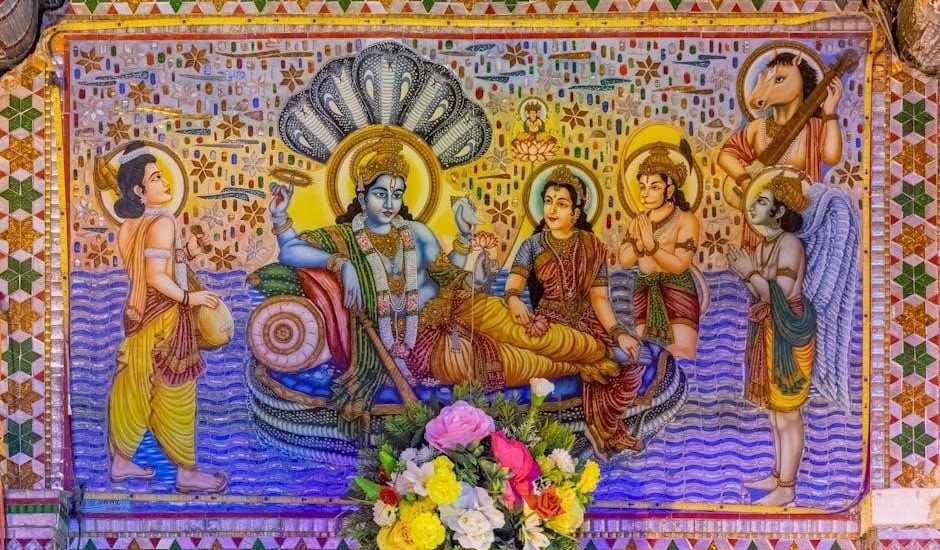
Vishnu Purana PDF: A Comprehensive Guide
Explore the complete English translation of the Vishnu Purana‚ a foundational Smriti text‚ readily available online through resources like motilalbanarsidass.com and archive.org.
The Vishnu Purana stands as one of the eighteen major Puranas‚ categorized as Smriti – texts “remembered” through tradition‚ distinct from the foundational Shruti texts like the Vedas and Upanishads. This comprehensive narrative spans the entirety of cosmic creation and eventual destruction‚ offering profound insights into Hindu cosmology‚ theology‚ and philosophy.
Central to its teachings is the supreme importance of Vishnu and his divine incarnations. The Purana details genealogies of kings and sages‚ interwoven with captivating stories illustrating Dharma‚ Karma‚ and the path to liberation (Moksha). Accessible in English translation‚ notably through editions including H.H. Wilson’s work with extensive footnotes‚ the Vishnu Purana provides a rich tapestry of spiritual knowledge. It’s a complete narrative‚ exploring devotion (Bhakti Yoga) and the multifaceted nature of the divine.
What is a Purana? Understanding Smriti Texts
Puranas are a genre of Sanskrit texts‚ classified as Smriti‚ meaning “that which is remembered‚” contrasting with Shruti – the revealed Vedic literature. They encompass a vast body of knowledge‚ including cosmology‚ mythology‚ genealogies‚ and Dharma. Alongside the Itihasas (Ramayana and Mahabharata)‚ Puranas form a crucial part of post-Vedic Classical Sanskrit literature.
Unlike the authoritative Shruti texts‚ Smriti texts offer interpretations and applications of Vedic principles. Puranas serve as accessible narratives conveying complex philosophical concepts to a wider audience. They are not considered directly divine revelation but are valued for their wisdom and guidance. The Vishnu Purana‚ as a Smriti text‚ details Vishnu’s glory and the path to salvation‚ reflecting diverse schools of thought within Hinduism.
Shruti vs. Smriti: The Vedic Literature Framework
Vedic literature is broadly categorized into Shruti and Smriti. Shruti‚ meaning “that which is heard‚” comprises the core‚ divinely revealed texts – the Vedas‚ Upanishads‚ Brahmanas‚ and Aranyakas. These are considered eternal truths‚ foundational to Hindu Dharma. Smriti‚ meaning “that which is remembered‚” encompasses all subsequent literature‚ including the Puranas‚ Itihasas‚ Vedangas‚ and Agamas.
The distinction lies in authority; Shruti is paramount‚ while Smriti offers interpretations and applications. The Vishnu Purana falls within Smriti‚ providing narratives and guidance based on Vedic principles. Understanding this framework clarifies the Purana’s role – it’s a valuable resource‚ but its authority rests upon the foundation of Shruti. Individual interpretations and sectarian views influence the weight given to each category.
The Significance of the Vishnu Purana
The Vishnu Purana holds immense significance as a comprehensive Smriti text‚ detailing the creation‚ destruction‚ and cyclical nature of the universe. It extensively reveres Vishnu‚ outlining devotion as a path to liberation (Moksha)‚ utilizing numerous synonymous names like Hari‚ Janardana‚ and Madhava.
Its narrative includes pivotal stories like Prahlada’s unwavering devotion‚ showcasing Vishnu’s protective power. The Purana’s complete scope‚ from cosmic origins to eventual dissolution‚ offers profound philosophical insights. Furthermore‚ the text emphasizes the interconnectedness of Shiva and Vishnu‚ stating they exist in each other’s form‚ highlighting a non-dualistic perspective. Access to the English translation‚ via PDFs‚ allows widespread study and understanding of these vital teachings.
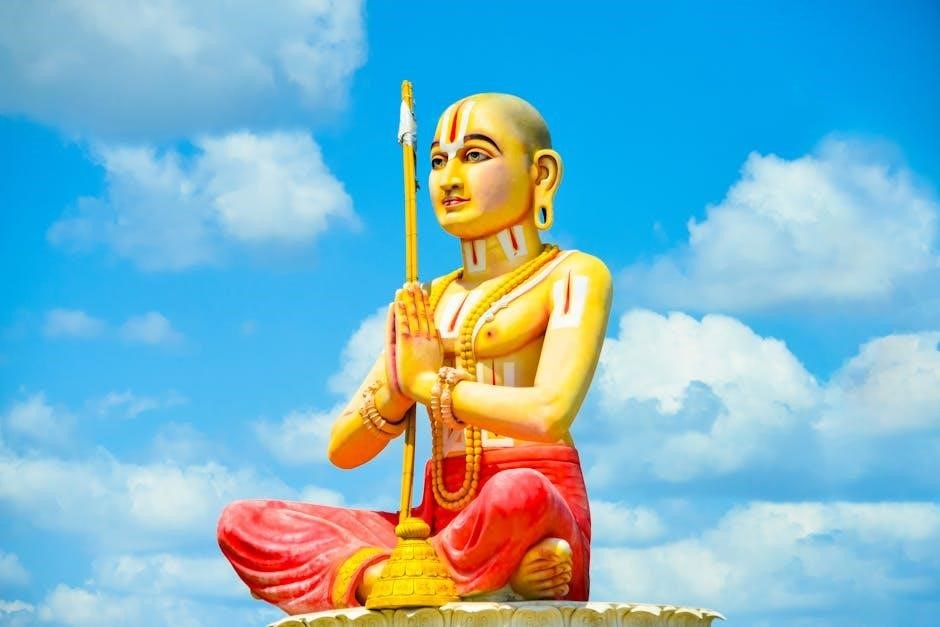
Content and Structure of the Vishnu Purana
This Purana encompasses a complete narrative‚ from universe creation to destruction‚ structured with six essential Angas‚ and includes detailed genealogies of kings and sages.
The Six Angas of a Purana
Traditionally‚ Puranas‚ including the Vishnu Purana‚ are structured around six distinct characteristics known as the Shadanga – the six limbs. These are Utpatti (cosmogony‚ or creation)‚ Pratisarga (dissolution and recreation)‚ Sargas (manifestation of beings)‚ Vamsa (genealogies of kings and sages)‚ Kalpa (cycles of time)‚ and Gati (achievements of great individuals).
The Vishnu Purana meticulously details each of these aspects‚ offering a comprehensive understanding of the universe’s origins‚ its cyclical nature‚ and the lineages of significant figures. Utpatti explains the initial creation‚ while Pratisarga describes the periodic dissolutions and subsequent recreations. Sargas focuses on the emergence of various beings‚ and Vamsa traces the ancestry of royal dynasties and revered sages. Kalpa outlines the vast timescales involved in cosmic cycles‚ and Gati narrates the accomplishments and journeys of notable individuals.
Creation Cosmology in the Vishnu Purana
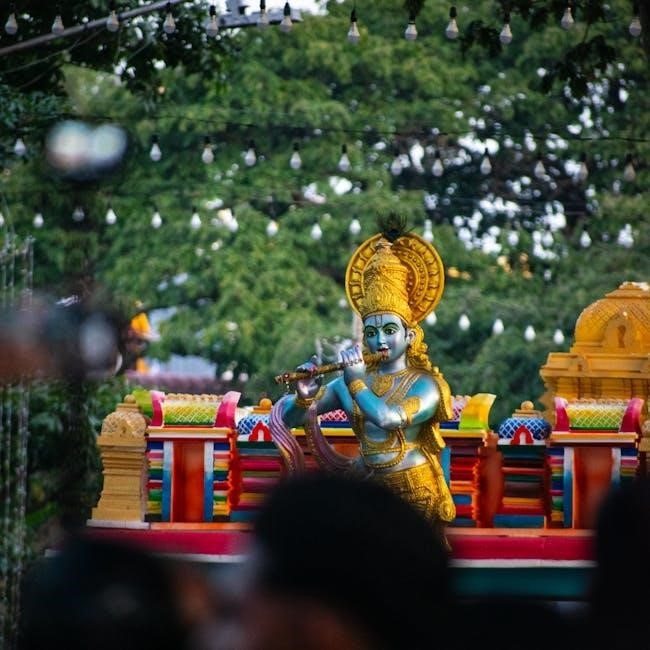
The Vishnu Purana presents a detailed cosmology‚ describing the universe’s creation as a cyclical process of manifestation and dissolution. Initially‚ there was only Brahman‚ the ultimate reality‚ existing in an unmanifested state. From Brahman emerged Narayana‚ representing the cosmic Vishnu‚ who then created the universe.
This creation unfolds through a series of stages‚ involving the emergence of primordial waters‚ the birth of Hiranyagarbha (the golden embryo)‚ and the subsequent formation of the earth‚ heavens‚ and various realms. The Purana elaborates on the planetary systems‚ continents‚ and oceans‚ providing a complex geographical and cosmological framework. This narrative isn’t a singular event but a recurring cycle‚ with periods of creation‚ preservation‚ and destruction governed by cosmic laws and Vishnu’s divine will.
The Role of Vishnu in the Universe
Within the Vishnu Purana‚ Vishnu is depicted as the preserver and sustainer of the universe‚ embodying cosmic order and righteousness. He is not merely a creator but actively maintains the created world‚ intervening whenever dharma (righteousness) declines. This intervention often takes the form of his divine incarnations‚ or avatars‚ descending to earth to restore balance.
The text emphasizes Vishnu’s all-pervasiveness‚ stating that he resides within all beings and elements of creation. He is the source of existence‚ the ultimate reality underlying the phenomenal world. Reverence and worship of Vishnu‚ through chanting his names – Hari‚ Janardana‚ Madhava‚ and others – are presented as pathways to liberation‚ highlighting his central role in the spiritual journey.
Genealogies of Kings and Sages
The Vishnu Purana meticulously details extensive genealogies tracing the lineages of both kings and revered sages (rishis). These detailed accounts aren’t simply historical records; they serve to establish the divine connections and legitimacy of rulers‚ linking them back to solar and lunar dynasties originating from divine ancestors.
Furthermore‚ the genealogies of sages illustrate the transmission of Vedic knowledge and spiritual authority through generations. These lineages demonstrate the unbroken chain of discipleship‚ emphasizing the importance of guru-shishya parampara. By tracing these connections‚ the Purana contextualizes narratives and reinforces the cosmic order‚ showcasing how earthly realms are interwoven with the divine.
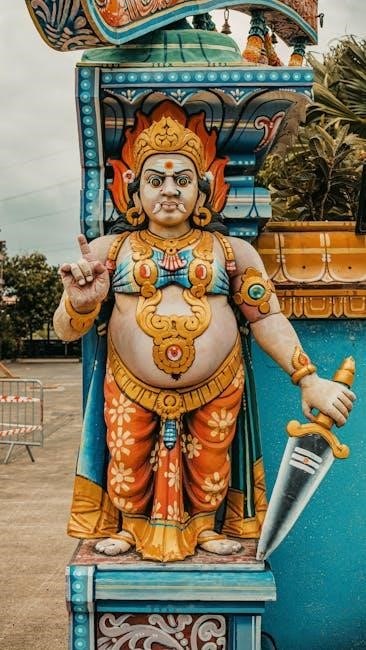
Key Stories and Legends
Discover captivating narratives within the Vishnu Purana‚ including the tale of Prahlada‚ Vishnu’s divine incarnations (avatars)‚ and the revered legend of Lakshmi Narayana.
The Story of Prahlada and Hiranyakasipu
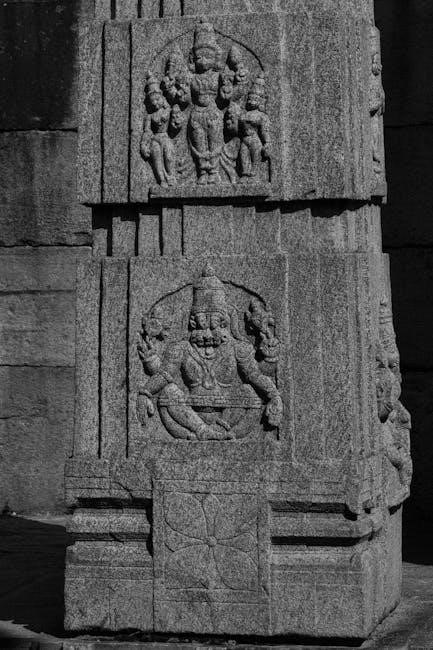
Delve into the compelling legend of Prahlada‚ a devoted follower of Vishnu‚ and his tyrannical father‚ Hiranyakasipu. Chapters 1.16 through 1.20 of the Vishnu Purana vividly recount Prahlada’s unwavering faith despite his father’s relentless persecution.
Hiranyakasipu‚ a powerful demon king‚ sought to eradicate all traces of Vishnu worship‚ yet Prahlada remained steadfast in his devotion. This narrative showcases Vishnu’s ultimate protection of his devotee‚ rescuing Prahlada from numerous attempts on his life orchestrated by his father.
The story exemplifies the triumph of righteousness over evil and highlights the importance of unwavering faith. It’s a central tale within the Purana‚ demonstrating Vishnu’s compassion and power‚ readily accessible within the English translation of the text.
The Divine Incarnations (Avatars) of Vishnu
Explore the Vishnu Purana’s detailed accounts of Vishnu’s various divine incarnations‚ or avatars. These appearances on Earth are pivotal to restoring cosmic balance and righteousness‚ a core theme throughout the text. The Purana meticulously describes each avatar’s purpose and the specific circumstances surrounding their descent.
While the text doesn’t explicitly list all avatars‚ it provides foundational narratives crucial to understanding the concept. Readers can find detailed descriptions within the English translation‚ offering insights into the divine play (Lila) of Vishnu.
These stories are not merely tales; they are profound theological lessons illustrating Vishnu’s unwavering commitment to dharma and the protection of his devotees‚ readily available for study within the PDF.
The Legend of Lakshmi Narayana
Delve into the beautiful and inseparable relationship between Lakshmi and Narayana‚ as depicted within the Vishnu Purana’s English translation. This divine couple represents the perfect union of energy (Lakshmi) and consciousness (Narayana)‚ essential for the creation and sustenance of the universe.
The PDF details how Lakshmi‚ the goddess of prosperity and fortune‚ is eternally connected to Vishnu‚ manifesting alongside him in his various incarnations. Their story emphasizes the importance of devotion‚ auspiciousness‚ and the harmonious balance of masculine and feminine energies.
Studying this legend within the Vishnu Purana offers profound insights into Hindu cosmology and the path to spiritual fulfillment‚ readily accessible through online resources.
Stories of Sages and Rishis
Discover captivating narratives of numerous sages and rishis woven throughout the Vishnu Purana’s English PDF translation. These stories illuminate the importance of righteous conduct‚ spiritual discipline‚ and the pursuit of knowledge as pathways to liberation.
The text details the lives and teachings of prominent figures‚ showcasing their devotion to Vishnu and their roles in preserving dharma. These accounts often serve as moral lessons‚ illustrating the consequences of actions and the power of unwavering faith.
Accessing the Vishnu Purana PDF allows readers to explore these inspiring tales‚ gaining valuable insights into ancient wisdom and the lives of enlightened beings.

Accessing the Vishnu Purana PDF
Find the full Vishnu Purana English translation publicly accessible and free to read online via archive.org and motilalbanarsidass.com resources.
Online Resources for the English Translation
Numerous online platforms offer access to the Vishnu Purana’s English translation‚ making this sacred text readily available to a global audience. Archive.org provides a publicly accessible‚ free-to-read online version of the complete text‚ allowing for convenient study and exploration.
Additionally‚ Motilal Banarsidass‚ a reputable publisher of Sanskrit and Indological texts‚ features the Vishnu Purana in their catalog. While a purchase may be required for a physical copy or specific digital formats‚ their website often provides excerpts and information about the edition.
These resources ensure that devotees‚ scholars‚ and anyone interested in Hindu scriptures can easily engage with the rich narratives and philosophical insights contained within the Vishnu Purana‚ fostering a deeper understanding of its significance.
Motilal Banarsidass Publication
Motilal Banarsidass Publishers is a well-respected name in the field of Sanskrit and Hindu literature‚ offering a published edition of the Vishnu Purana. This publication provides a comprehensive presentation of the Sanskrit original alongside a detailed English translation‚ facilitating deeper study for scholars and enthusiasts alike.
Their edition notably includes extensive footnotes contributed by H.H. Wilson‚ offering valuable context‚ explanations of complex terms‚ and insights into the historical and cultural background of the text. This makes the Motilal Banarsidass publication a particularly valuable resource for those seeking a scholarly and nuanced understanding of the Vishnu Purana;
While often requiring a purchase‚ it represents a high-quality‚ reliable source for accessing this important Purana.
Archive.org Availability
Internet Archive (Archive.org) provides free‚ public access to a digitized version of the Vishnu Purana’s English translation. This is an invaluable resource for readers seeking to explore the text without cost‚ making the Purana accessible to a wider audience globally.
The version available on Archive.org includes the complete translation‚ along with the extensive footnotes originally provided by H.H. Wilson. This allows for a detailed and scholarly reading experience‚ mirroring the benefits of the Motilal Banarsidass publication but in a freely available digital format.
Researchers‚ students‚ and devotees can readily access and download the PDF for offline study and reference.
H.H. Wilson’s Translation and Footnotes
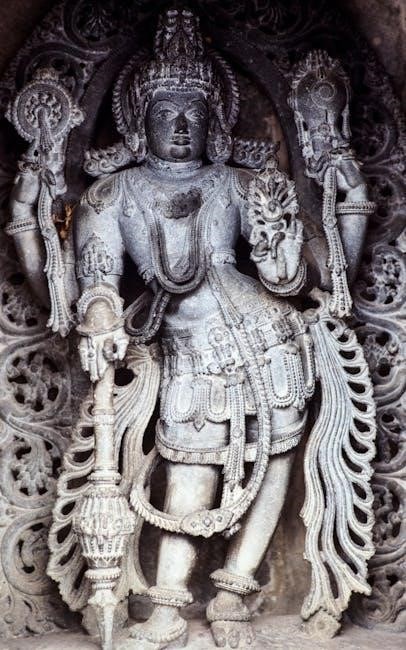
H.H. Wilson’s English translation of the Vishnu Purana is considered a cornerstone for English-speaking readers‚ offering a comprehensive and scholarly interpretation of the Sanskrit original. This translation isn’t merely a rendering of the text‚ but is significantly enhanced by Wilson’s detailed and insightful footnotes.
These footnotes provide crucial context‚ explaining cultural references‚ mythological allusions‚ and linguistic nuances that might be lost on a modern reader. They delve into the historical and philosophical background‚ enriching the understanding of the Purana’s narratives and teachings.
Both the Motilal Banarsidass publication and the Archive.org version feature Wilson’s complete translation and footnotes‚ ensuring accessibility to this valuable scholarly work.
Theological and Philosophical Aspects
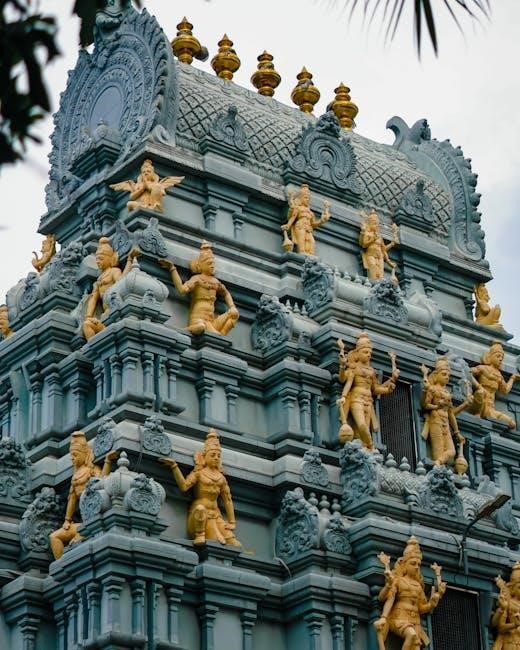
Delve into the Vishnu Purana’s exploration of Dharma‚ Karma‚ Bhakti Yoga‚ and Moksha‚ alongside its unique perspective on the interconnectedness of Vishnu and Shiva.
The Relationship Between Vishnu and Shiva
The Vishnu Purana navigates the complex theological relationship between Vishnu and Shiva‚ presenting them not as opposing forces‚ but as complementary aspects of the divine. A key verse from the Harivamsha Parva of the Mahabharata‚ specifically 2.125;29‚ beautifully illustrates this interconnectedness: “Shiva is in the form of Vishnu‚ as Vishnu is in the form of Shiva.”
This highlights a profound unity‚ suggesting that both deities embody the ultimate reality. The text doesn’t prioritize one over the other‚ but rather emphasizes their inherent equivalence and mutual reverence. Understanding this relationship is crucial for grasping the Purana’s broader philosophical outlook‚ moving beyond simplistic dualities and embracing a holistic view of divinity. It showcases a nuanced perspective on Hindu cosmology and the nature of the Supreme Being.
The Concept of Dharma and Karma
Within the Vishnu Purana‚ the principles of Dharma (righteous conduct) and Karma (action and consequence) are central to understanding the cyclical nature of existence and the path to liberation. The Purana elucidates how adherence to Dharma‚ fulfilling one’s duties according to their varna and ashrama‚ generates positive Karma‚ leading to favorable rebirths and eventual Moksha.
Conversely‚ actions violating Dharma accumulate negative Karma‚ perpetuating the cycle of suffering. The narrative structure‚ filled with stories of virtuous characters like Prahlada‚ exemplifies the rewards of righteous living. The text emphasizes that every action‚ thought‚ and intention has repercussions‚ shaping an individual’s destiny. This underscores the importance of ethical conduct and devotion as pathways to spiritual progress.
Bhakti Yoga and Devotion to Vishnu
The Vishnu Purana profoundly emphasizes Bhakti Yoga – the path of devotion – as a primary means to attain liberation. The text details the reverence and worship of Vishnu through various practices‚ including chanting His names (Nama-Sankirtana) like Hari‚ Janardana‚ Madhava‚ and Achyuta‚ fostering a deep personal connection.
It highlights that sincere devotion‚ coupled with selfless service and surrender to Vishnu‚ transcends the limitations of Karma and Jnana (knowledge). The stories within‚ particularly the legend of Prahlada‚ exemplify unwavering faith and its power to overcome adversity. The Purana advocates for cultivating love and devotion as the most accessible and effective path to realizing Vishnu and achieving Moksha.
Liberation (Moksha) and the Path to Salvation
The Vishnu Purana meticulously outlines the path to Moksha‚ or liberation from the cycle of birth and death. It presents devotion to Vishnu‚ alongside righteous conduct (Dharma) and understanding of Karma‚ as crucial components of this journey. The text details how selfless actions‚ coupled with sincere Bhakti Yoga‚ gradually dissolve accumulated Karmic debts.
Furthermore‚ the Purana emphasizes that realizing one’s true nature – the inherent connection with the divine – is paramount. Through the narratives and teachings within‚ it guides seekers towards transcending illusion and attaining lasting peace. The complete narrative‚ from creation to destruction‚ illustrates the cyclical nature of existence and the ultimate goal of liberation from it.
Understanding the Names of Vishnu
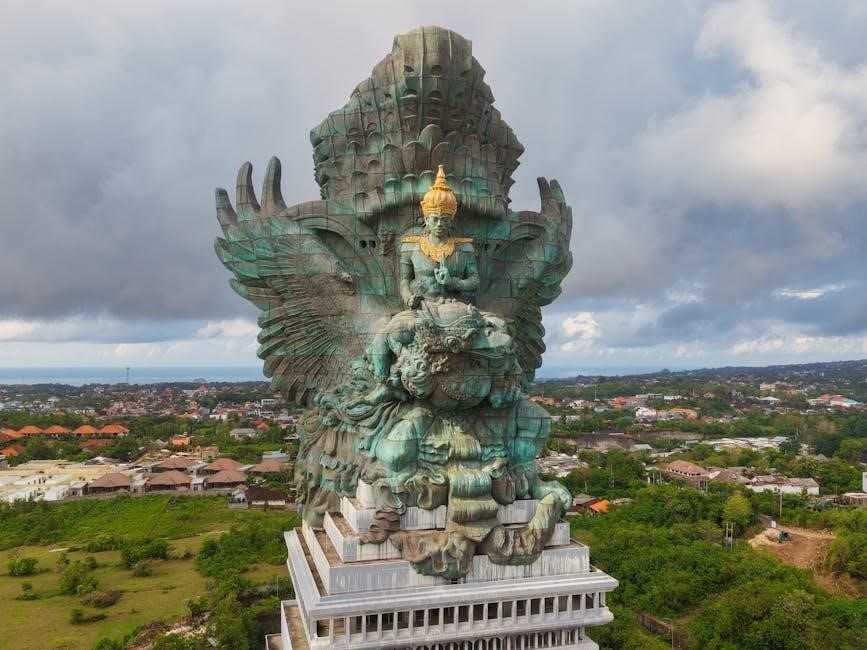
The Vishnu Purana profusely utilizes synonymous names like Hari‚ Janardana‚ Madhava‚ Achyuta‚ and Hrishikesha‚ highlighting their power and the importance of Nama-Sankirtana.
Hari‚ Janardana‚ Madhava‚ Achyuta
Within the Vishnu Purana‚ the consistent and reverent use of Vishnu’s numerous names – Hari‚ Janardana‚ Madhava‚ and Achyuta‚ among others – isn’t merely stylistic; it’s deeply theological. Each name encapsulates a specific aspect of the divine‚ revealing Vishnu’s multifaceted nature and cosmic roles. ‘Hari’ signifies the remover of suffering‚ while ‘Janardana’ denotes one who controls and subdues the ego. ‘Madhava’ points to Vishnu’s connection to the primordial being‚ and ‘Achyuta’ emphasizes his immutable and eternal essence.
These aren’t simply labels‚ but potent mantras themselves‚ imbued with spiritual energy. The repetition and contemplation of these names‚ known as Nama-Sankirtana‚ are presented within the Purana as a powerful path to liberation and devotion. Understanding these names unlocks a deeper comprehension of Vishnu’s divine attributes and the path to realizing one’s own spiritual potential.
Hrishikesha and Other Synonyms
Beyond Hari‚ Janardana‚ Madhava‚ and Achyuta‚ the Vishnu Purana extensively employs a rich tapestry of synonyms to describe the divine – notably‚ Hrishikesha. This name signifies “Lord of the Senses‚” highlighting Vishnu’s control over the mind and its perceptions‚ guiding devotees towards self-mastery and spiritual awakening. The text’s profuse use of these varied names isn’t redundant; rather‚ it’s a deliberate strategy to encompass the ineffable nature of the divine.
Each synonym offers a unique lens through which to perceive Vishnu’s glory‚ deepening understanding and fostering a more intimate connection. This linguistic richness underscores the belief that no single name can fully capture the totality of the divine essence‚ encouraging continuous exploration and devotion through Nama-Sankirtana.
The Importance of Nama-Sankirtana
The Vishnu Purana implicitly and explicitly champions Nama-Sankirtana – the collective chanting of Vishnu’s holy names – as a potent spiritual practice. The text’s repeated invocation of names like Hari‚ Janardana‚ and Hrishikesha isn’t merely descriptive; it’s an invitation to participate in this transformative practice. Chanting isn’t simply recitation; it’s a direct engagement with the divine energy embodied within each name.
This practice transcends intellectual understanding‚ fostering a deeply felt connection with Vishnu. The power of Nama-Sankirtana lies in its accessibility‚ requiring no elaborate rituals or complex philosophies‚ making it available to all sincere seekers. It’s a path to liberation‚ dissolving ego and cultivating pure devotion.
The Power of Chanting Vishnu’s Names
The Vishnu Purana underscores the profound power inherent in chanting Vishnu’s numerous names‚ highlighting it as a direct path to spiritual realization. These names aren’t arbitrary labels; they embody the divine qualities and energies of the Lord. Consistent chanting‚ or Nama-Sankirtana‚ cultivates a deep‚ personal relationship with Vishnu‚ transcending intellectual comprehension.
This practice purifies the heart‚ diminishes ego‚ and fosters unwavering devotion. The text suggests that sincere repetition of names like Hari‚ Madhava‚ and Achyuta unlocks divine grace and facilitates liberation (Moksha). It’s a readily accessible spiritual discipline‚ requiring no complex rituals‚ offering solace and strength to all practitioners.
The Vishnu Purana in Context
Positioned within the Smriti tradition‚ the Vishnu Purana complements Shruti texts‚ influencing Hindu art‚ literature‚ and culture with its narratives and philosophies.
Comparison with Other Puranas
The Vishnu Purana‚ like other Puranas‚ presents a comprehensive narrative spanning cosmic creation to eventual destruction‚ yet distinguishes itself through its focused devotion to Vishnu. While many Puranas explore diverse deities and philosophies‚ the Vishnu Purana consistently emphasizes Vishnu’s supremacy and various incarnations.
Compared to the Shiva Purana‚ which centers on Shiva‚ or the Devi Bhagavata Purana‚ dedicated to the Divine Feminine‚ the Vishnu Purana prioritizes Vaishnava perspectives. However‚ it acknowledges the interconnectedness of deities‚ famously stating “Shiva is in the form of Vishnu‚ as Vishnu is in the form of Shiva‚” highlighting a non-dualistic understanding.
Similar to other Puranas‚ it utilizes genealogies‚ myths‚ and legends to convey dharma and spiritual truths‚ but its detailed exploration of Vishnu’s names – Hari‚ Janardana‚ and others – and the path of Bhakti Yoga are particularly prominent. Ultimately‚ each Purana offers a unique lens through which to understand the vastness of Hindu cosmology and theology.
Its Place in Hindu Tradition
The Vishnu Purana holds a significant position within the Hindu tradition as a foundational Smriti text‚ revered for its detailed exposition of Vaishnava theology and cosmology. Categorized within the eighteen major Puranas‚ it serves as a vital resource for understanding dharma‚ karma‚ and the path to liberation (Moksha).
Its influence extends beyond philosophical discourse‚ deeply impacting art‚ literature‚ and cultural practices. Stories like Prahlada’s unwavering devotion and the legends of Lakshmi Narayana have inspired countless artistic representations and devotional practices.
The Purana’s emphasis on Nama-Sankirtana – the chanting of Vishnu’s names – has become a central tenet of Vaishnava devotionalism. As a Smriti text‚ its authority is understood within the broader framework of Vedic literature‚ offering guidance and insight for generations of Hindu practitioners.
Influence on Art‚ Literature‚ and Culture
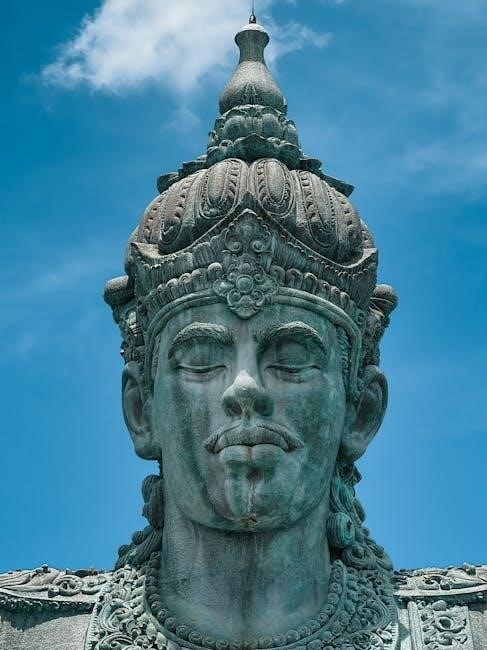
The Vishnu Purana’s narratives have profoundly influenced artistic expression across centuries‚ inspiring sculptures‚ paintings‚ and temple architecture dedicated to Vishnu and his avatars. The story of Prahlada‚ for instance‚ is a recurring theme in visual arts‚ depicting divine intervention and unwavering faith.
In literature‚ the Purana’s rich cosmology and character portrayals have served as source material for numerous adaptations and retellings‚ enriching the tapestry of Hindu storytelling. The legend of Lakshmi Narayana continues to inspire poetic verses and dramatic performances.
Culturally‚ the Purana reinforces values of devotion‚ righteousness‚ and the cyclical nature of existence‚ shaping societal norms and ethical frameworks. Its emphasis on Nama-Sankirtana has fostered a vibrant tradition of devotional music and communal chanting.
Relevance in Modern Times
Despite being an ancient text‚ the Vishnu Purana retains significant relevance today‚ offering insights into enduring philosophical questions about dharma‚ karma‚ and liberation. Its exploration of the relationship between Vishnu and Shiva promotes interfaith understanding and tolerance.
The Purana’s emphasis on Bhakti Yoga resonates with modern seekers exploring paths to spiritual fulfillment through devotion and surrender. The accessible English translations‚ like H.H; Wilson’s‚ broaden its reach to a global audience.
Furthermore‚ the Vishnu Purana’s narratives provide a cultural anchor‚ connecting individuals to their heritage and fostering a sense of identity. Studying its cosmology can inspire awe and a deeper appreciation for the universe’s complexities.